Register a Business in Germany: Cost and Steps for 2026
Short answer
Registering a trade (Gewerbeanmeldung) in Germany usually costs a small fee set by your municipality. Berlin charges €26 in person, €15 online and €31 for a company with one director. Freelancers in liberal professions do not register a trade at all. Higher costs come later, and only for some: licences, chamber fees or notary costs for a GmbH.
The registration fee is the smallest cost of starting a business in Germany. In Berlin it is €15 online. What surprises newcomers is everything that follows: a letter from the chamber of commerce, a tax questionnaire with a deadline, sometimes a statutory accident insurer they have never heard of. Little of it is expensive if you know the exemptions.
Here are the costs in the order they turn up.
What the registration itself costs
Each municipality sets its own fee, so there is no national price. As a reference, these are the fees on the Berlin service portal in October 2026:
| Case | Fee in Berlin |
|---|---|
| Sole trader, or each partner in a partnership, in person | €26.00 |
| Online filing, paid by credit card | €15.00 |
| Company (legal entity) with one legal representative | €31.00 |
| Each additional legal representative | €13.00 |
Other cities charge amounts of a similar order; your municipality’s fee schedule or trade office page has the exact figure. Two things stand out in the Berlin list. Filing online saves almost half. And in a partnership (GbR) each partner pays, so two partners filing in person pay €52.
Trade or freelance: you may not need to register at all
Germany splits self-employed people into two groups, and only one registers a trade.
| Trade (Gewerbe) | Freelancer (freier Beruf) | |
|---|---|---|
| Typical activities | Retail, e-commerce, most services, crafts | Writing, design, translation, teaching, many consulting and IT roles |
| Registers with | Local trade office, then tax office | Tax office only |
| Trade tax | Yes, above a €24,500 allowance for sole traders | No |
| Chamber membership | Yes, chamber of commerce or crafts | No, except regulated professions with their own chambers |
The freelance professions are listed in § 18 of the Income Tax Act. If you are not sure where you fall, describe your work precisely in the tax questionnaire and let the tax office decide. Software developers, for example, can end up on either side depending on what exactly they do.
Costs that can come with registration
For most service businesses the fee is all you pay. Some activities add costs that are much higher.
Licensed trades need approval before registration. Estate agents, insurance brokers and security firms are examples. Depending on the licence, the authority wants a certificate of good conduct, an extract from the central trade register, proof of sound finances or an exam. Each document has its own fee.
Regulated crafts, such as electrical work, plumbing or tiling, require entry in the crafts register and usually a master craftsman qualification or equivalent. The chamber of crafts charges for that.
Founders who start as a GmbH or UG pay a notary and the commercial register before they can register the trade. That is one reason most people starting without capital begin as sole traders.
What happens after you register
Registration sets several processes in motion. The municipality passes your details to the tax office, as the Fiscal Code requires, and the chambers and other bodies are informed too.
- Day 1Trade registration, at the same time as you start. Filed within a week, it also counts as your notification to the statutory accident insurer.
- Within 1 monthTax registration questionnaire (Fragebogen zur steuerlichen Erfassung) filed electronically via ELSTER.
- A few weeksLetter from the chamber of commerce or crafts: membership and a fee notice or exemption.
- ThenTax number from the tax office, and possibly a notice about VAT returns or advance income tax payments.
The questionnaire matters more than the registration. It asks for your expected revenue and profit, your bank details, and whether you want the small business VAT exemption, which applies if turnover stays at or below €25,000 in the previous year and €100,000 in the current one. For most new founders selling to consumers, the exemption saves admin. For those selling mainly to VAT-registered businesses, opting out can pay off because you reclaim input VAT. The choice binds you for five years if you opt out, so think it through.
Chamber fees: who pays
Registering a trade makes you a member of the chamber of industry and commerce (IHK), or of the chamber of crafts for crafts businesses, by law. That alarms many newcomers. Usually without reason:
- Sole traders and partnerships not in the commercial register pay nothing while trade profit stays at or below €5,200 a year.
- Founders who are natural persons, not in the register and not self-employed in the previous five years are exempt from the basic fee and levy in years one and two, and from the levy in years three and four, if profit stays at or below €25,000.
Each chamber sets its own rates above those limits.
Late or missing registration
Failing to register a trade properly or on time is an administrative offence under § 146 of the Trade Regulation Act, with a fine of up to €1,000. Undeclared income is usually the bigger problem once the tax office finds out. Register a day early rather than a month late.
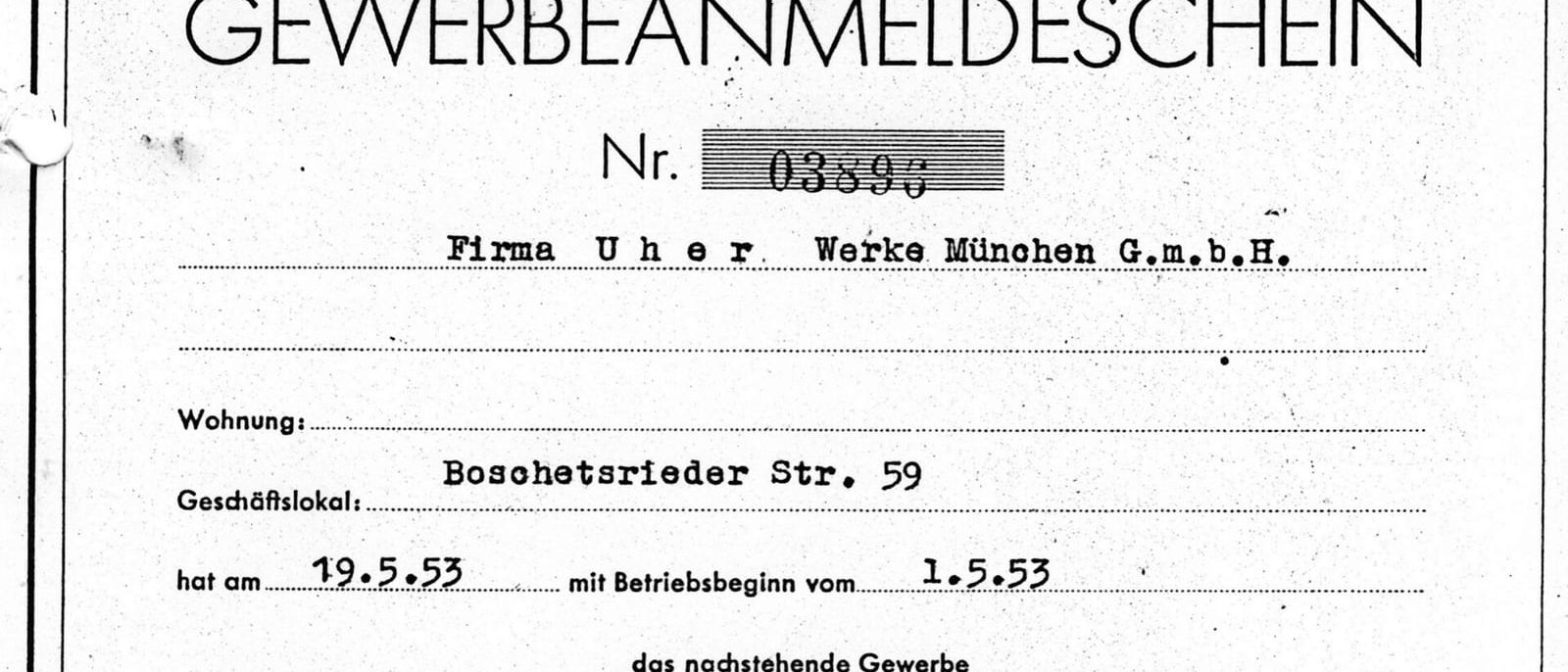
The trade certificate is not a permit, by the way. It only confirms that you notified the authorities. Licensed activities still need their licence.
Missing the one-month deadline for the tax questionnaire rarely leads to a fine straight away, but it delays your tax number, and without one you cannot issue proper invoices to German business clients. File it in the first week.
For expats: what is different
Three points trip up international founders. Non-EU citizens need a residence title that allows self-employment; check the wording on yours before you file. Everything runs in German, from the online form to the tax questionnaire, so prepare the description of your activity carefully. And a German bank account makes everything after registration easier, from paying the fee in person to receiving client payments.
If your plan involves software and you have no technical partner yet, a free first consultation with a studio such as OnlineBuilders can help you size the build before you commit.
Your next step: search your city’s website for “Gewerbeanmeldung” and check whether online filing is available. Write a one-sentence description of your activity that is as specific as possible. Running costs after registration are covered in the guide to self-employed costs in Germany; if you plan to keep your job for now, read the rules for starting a side business while employed, and for ideas that need little money see how to start a business with no money.
Step by step
- Find the responsible trade office It is the trade or public order office where your business is based, which for a home office is your own municipality.
- Gather documents ID or passport, a residence permit that allows self-employment if you are a non-EU citizen, plus any licences or a commercial register extract.
- File online or in person Fill in the form, describe the activity precisely and pay the fee.
- Submit the tax registration questionnaire Within one month of starting, file the Fragebogen zur steuerlichen Erfassung through ELSTER and decide on the small business VAT exemption.
- Deal with the chamber and insurance letters Expect a letter from the chamber of commerce or crafts, check for fee exemptions, and see whether the accident insurance body requires cover.
Questions people ask
Can I register a business in Germany in English?
The forms and the tax questionnaire are in German. Some city portals offer English guidance pages, but the official process runs in German, so use a translation tool or bring help for the descriptions.
Do I need a residence permit to register a business?
EU citizens do not. Non-EU citizens need a residence title that allows self-employment; Berlin lists the residence permit among the documents for non-EU applicants. A permit that only allows employment is not enough.
Freelancer or trade: which am I?
Liberal professions such as writers, designers, translators, teachers and many consultants are freelancers under § 18 of the Income Tax Act and only register with the tax office. Selling goods, running a shop or most service businesses count as a trade. The tax office makes the final call.
What happens if I register late?
Failing to register on time is an administrative offence under the Trade Regulation Act, with a fine of up to €1,000. The tax consequences of undeclared income are usually the bigger problem.